
SLOTO · PRAGMATIC PLAY
Death Dominion guide: understand Doom before it rules the grid
I break down Pragmatic Play's 6×5 Pay Anywhere slot, where tumbles build multiplier sequences and Doom can either strengthen them or erase the multiplier symbols in play.
My quick verdict
Doom creates the game's tension because it can help or erase multipliers.
Death Dominion uses a familiar Pay Anywhere and tumble framework, but the Doom symbol gives every multiplier sequence a clear dramatic question: will it improve the board or erase the values already visible? That uncertainty makes the game more distinctive than its graveyard theme alone.
The published medium volatility does not make every session smooth. A tumble may stop quickly, multipliers can arrive without creating a large result, and a Doom symbol can remove the multiplier symbols in play. The four bonus variants change that risk in meaningful ways rather than merely recolouring the same feature.
I would try it for the readable 6×5 layout, the escalating bonus logic and the unusual negative symbol. I would skip it when losing a promising multiplier build would feel irritating enough to change my stake or extend the session.
The strongest part of the design is that the feature is understandable without pretending to be predictable. I can explain exactly what Doom is allowed to do, yet no previous transformation tells me which branch a future symbol will take.
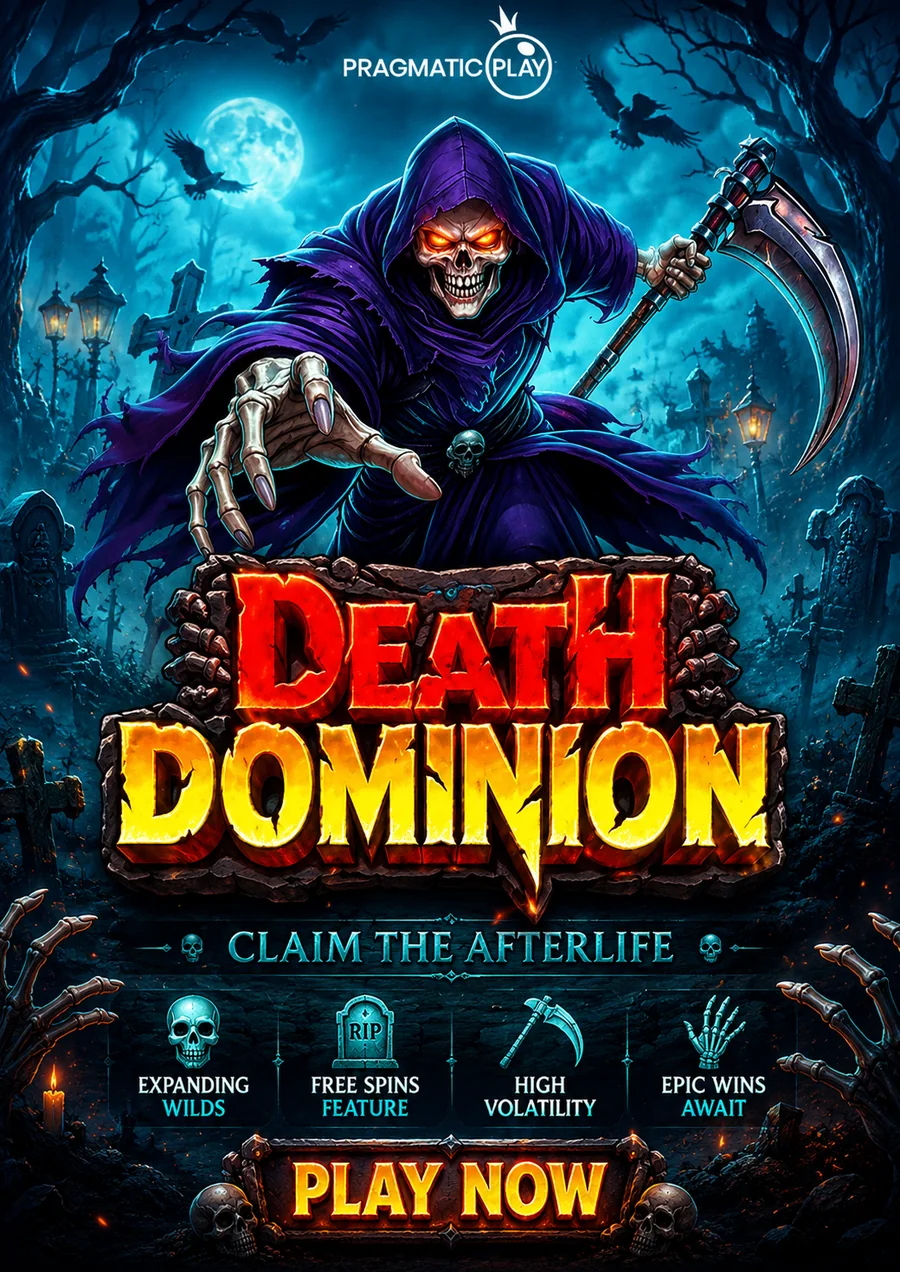
The supplied artwork supports that idea without carrying the analysis. The reaper, lantern and headstone make the page recognisable, while the verdict still rests on pace, rules, cost and how the negative symbol affects a real session.
The official numbers
Published figures set the limits, but they do not predict one session.
Pragmatic Play lists a 6×5 grid, Pay Anywhere wins, 96.54% RTP, medium volatility, a 25.51% hit frequency and a maximum win of 20,000 times the bet. The displayed bet range is 0.20 to 240 in supported currencies, although the live operator configuration remains decisive.
The regular game can show multiplier symbols worth up to 100×, while the bonus raises the possible symbol value to 1,000×. Those are individual mechanic limits. They do not describe the usual size of a tumble, a bonus or a full session.
I verify the RTP and total stake in the opened rules before testing. Regional versions can remove feature purchase controls, use another currency range or expose a different mathematical configuration even when the artwork is identical.
Hit frequency also needs context. A counted hit may be smaller than the total stake, so a 25.51% figure cannot be read as a profit frequency. I compare the final win with the full paid amount rather than counting every highlighted symbol as a successful round.
Maximum win and maximum multiplier are different limits. The 20,000× cap applies to the completed game result, while 100× and 1,000× describe multiplier-symbol values in specific modes. Putting them in separate table cells prevents a common comparison error.
| Provider | Pragmatic Play | Layout | 6 reels × 5 rows |
|---|---|---|---|
| Win system | Pay Anywhere + tumbles | Published RTP | 96.54% |
| Volatility | Medium | Hit frequency | 25.51% |
| Maximum win | 20,000× bet | Bet range | 0.20–240 |
| Base multiplier | Up to 100× | Bonus multiplier | Up to 1,000× |
| Free Spins | 12 / 15 / 20 · Standard · Dominion · Immortal · Dominion Immortal | ||
Pay Anywhere on a 6×5 grid
Matching symbols pay by count anywhere on the 6×5 grid.
Death Dominion evaluates matching symbols by quantity anywhere on the 30-position screen. A win therefore does not need to begin on the left or follow a payline. The paytable states how many copies of each symbol are required and what that count pays at the selected total bet.
This system makes the whole board relevant, but visual proximity is not the rule. Two symbols can sit far apart and still belong to the same evaluated count. Conversely, a dramatic cluster has no special value unless the number and symbol type meet the paytable requirement.
I open the paytable once before spinning and compare a highlighted result with its symbol count. That is enough to understand the basic evaluation without trying to estimate payouts from colour, position or animation.
Pay Anywhere is especially readable on desktop because all 30 positions remain visible at once. On a phone, I rely on the game's highlight and counter rather than trying to remember every copy while symbols are falling.
Wild symbols can help satisfy a paying count according to the paytable, but they do not change the underlying rule into a payline system. The result is still evaluated by quantity across the grid.
Tumbles and multiplier symbols
One paid spin can create several tumbles before the grid resets.
After a win, the contributing symbols disappear and new symbols fall into the empty spaces. If the refill creates another qualifying count, the game pays again and continues tumbling. The sequence ends when the new grid contains no win.
Multiplier symbols can appear during these sequences. In the base game they may carry values up to 100×, but the interface determines how and when the visible values apply. I wait until the full animation and win meter finish before reading the settled total.
A long tumble is not evidence that the next paid spin is more likely to continue. Once the sequence closes, the next press starts a new random outcome at the currently displayed stake.
A tumble chain belongs to one paid spin. That distinction matters when checking the stake history: several refills do not mean that several new bets were taken, unless a new spin was actually started after the chain ended.
I use the settled total to compare the whole chain with the original stake. Judging each intermediate flash separately can make a busy sequence feel larger than its final economic result.
The Doom symbol
Doom either becomes a multiplier or removes every multiplier in play.
At the end of a tumble sequence, a Doom symbol can transform into a random multiplier. The alternative is deliberately harsh: it can nullify all multiplier symbols visible in that sequence. The feature is suspenseful precisely because the same icon can help or hurt.
I treat Doom as a rule, not as a near-miss signal. A destructive outcome does not make a favourable transformation due next time, and a helpful transformation does not make another one more likely. Both are random branches of the mechanic.
The Immortal bonus modifier is important because it removes the destructive branch. That changes how a bonus develops, but it still does not guarantee enough paying symbols to turn every multiplier into a large result.
When Doom removes multipliers, the game is not taking money already shown as a completed cash win. It is resolving symbols inside the current sequence before the final result is settled. The timing can feel severe, so waiting for the final meter matters.
This mechanic may be a poor fit for anyone who dislikes features that reverse visible progress. Recognising that preference in demo mode is more useful than trying to find a betting pattern that avoids a random Doom outcome.
Triggering Free Spins
Four to six Scatters award 12, 15 or 20 Free Spins.
Landing four, five or six Scatter symbols triggers 12, 15 or 20 Free Spins respectively. Three or more Scatters during the feature add five spins. The exact bonus variant depends on whether ordinary, Dominion or Immortal Scatters helped form the trigger.
During Free Spins, multiplier symbols can reach 1,000×. Winning multipliers are added to a running total multiplier, which is then applied according to the bonus rules. The counter and the settled win display are more reliable than guessing from several overlapping animations.
Extra spins extend the feature but do not promise a profitable finish. I read the remaining-spin counter, the accumulated multiplier and the active modifier separately so presentation does not blur three different pieces of information.
The running bonus multiplier is easiest to read after each tumble has finished. I note whether a new multiplier qualified under the feature rules, then check that the displayed total changed before the next sequence begins.
A retrigger adds time to the bonus, not a fixed amount of value. Five extra spins can contain useful multipliers, ordinary wins or no meaningful improvement, just like the original allocation.
The four bonus variants
Dominion adds multipliers; Immortal prevents Doom from erasing them.
Standard Free Spins preserve the core tension between helpful and destructive Doom outcomes. Dominion Free Spins enhance the multiplier side of the mechanic, including the possibility of adding extra random multiplier symbols.
Immortal Free Spins make Doom transform into a multiplier rather than wiping the multiplier symbols. Dominion Immortal combines both advantages: enhanced multiplier creation and protection from Doom's nullification branch.
The top variant has the strongest rule set, not a guaranteed return. Scatter composition chooses the naturally triggered mode, while direct-access options may be unavailable in some markets and always carry a clearly displayed cost.
Dominion changes opportunity, while Immortal changes risk. Keeping those two jobs separate makes the combined Dominion Immortal mode easy to understand without assuming that its favourable rules guarantee a favourable outcome.
If a special Scatter helps trigger the feature, I read the mode label before the first spin. The visual presentation can move quickly, but the name and counters show which Doom behaviour remains active.
Ante Bets, Super Spins and Bonus Buy
Check the full price before using an enhanced bet or bonus purchase.
The game can expose enhanced bet modes and several direct bonus options. Published feature prices include 100×, 200×, 300× and 750× the base bet for different bonus routes; some builds may show additional premium choices. Availability depends on jurisdiction and operator.
A multiplier such as 100× beside a purchase button is a price, not a promised win. I calculate the actual currency amount before confirming and compare it with the complete session limit rather than only the small base stake shown on the control.
For learning, demo mode is more useful than repeatedly buying features. It lets me compare Doom behaviour, multiplier counters and bonus variants without converting a rules check into a sequence of expensive single decisions.
Enhanced base bets can multiply the cost of every spin, not just the price of a one-off bonus. I return the control to the standard state after testing so the next press cannot use a higher stake by accident.
Where a purchase option is absent, I do not search for a workaround. The operator or local rules may intentionally disable it, and the natural bonus trigger remains random.
A practical demo checklist
Use demo mode to learn the rules, not to predict a paid result.
I start at the lowest virtual stake, open the rules and confirm the 6×5 Pay Anywhere evaluation. On the first win I count the matching symbols, watch them disappear and wait until the entire tumble chain settles.
When Doom appears, I note whether it transforms or removes the multiplier symbols in play. In Free Spins I identify the active variant before judging the sequence, then track the remaining spins and total multiplier independently.
Finally, I rotate the phone, reopen the paytable and check that the total bet remains readable. A short sample can reveal interface clarity and feature rhythm; it cannot reveal the return I should expect from a later paid session.
I also test what happens after reopening the information panel. The page should preserve a clear route back to the game without hiding the total bet or placing the confirmation control under another overlay.
The final demo note is emotional rather than mathematical: if a wiped multiplier immediately creates an urge to press again, that response is evidence about fit, not evidence that the next result is likely to improve.
Reading the supplied screens
The three screenshots show interface states, not typical results.
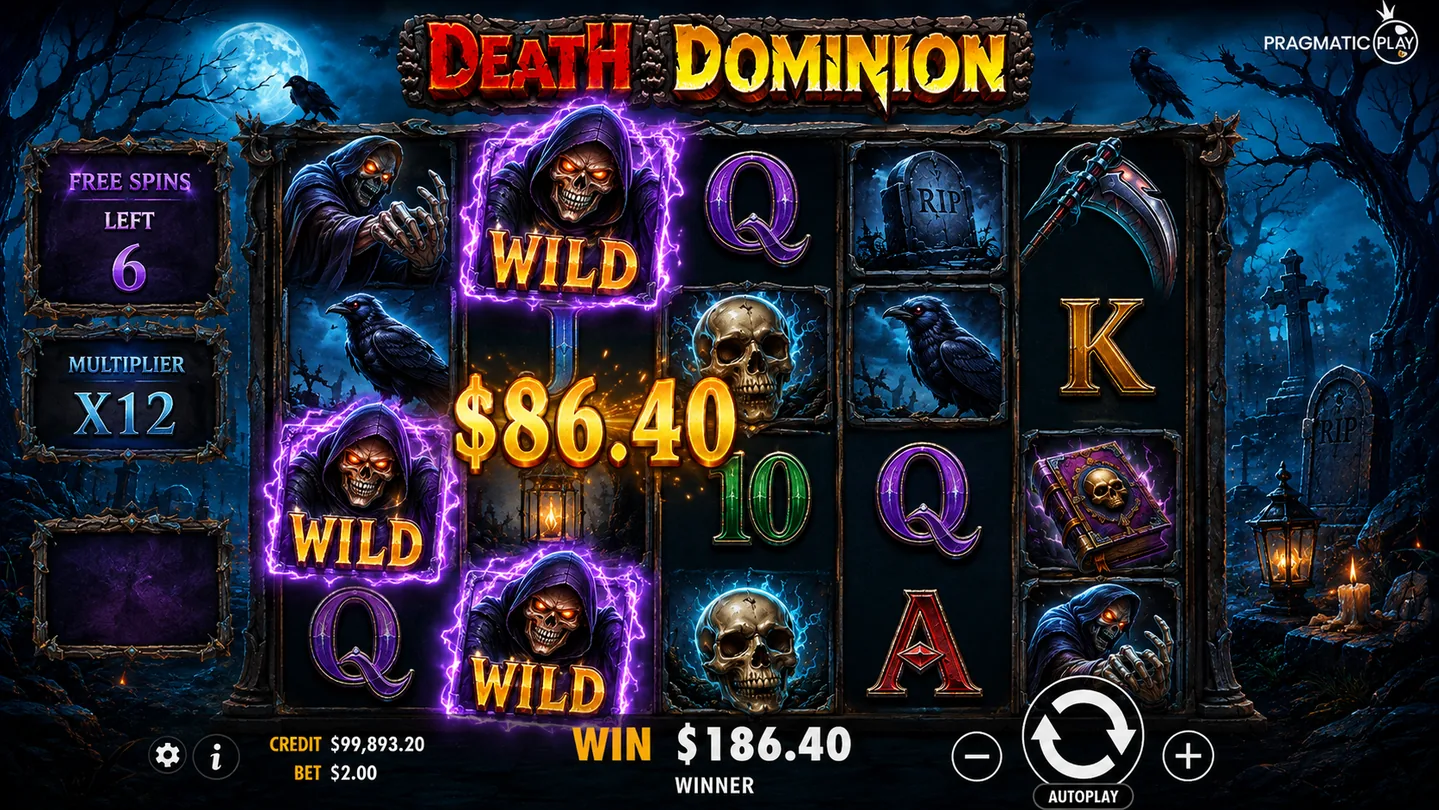
The first supplied screen captures Free Spins with seven spins remaining, a 12× multiplier display and several Wild symbols. It is useful for locating the bonus counters, not for estimating how often that layout appears.
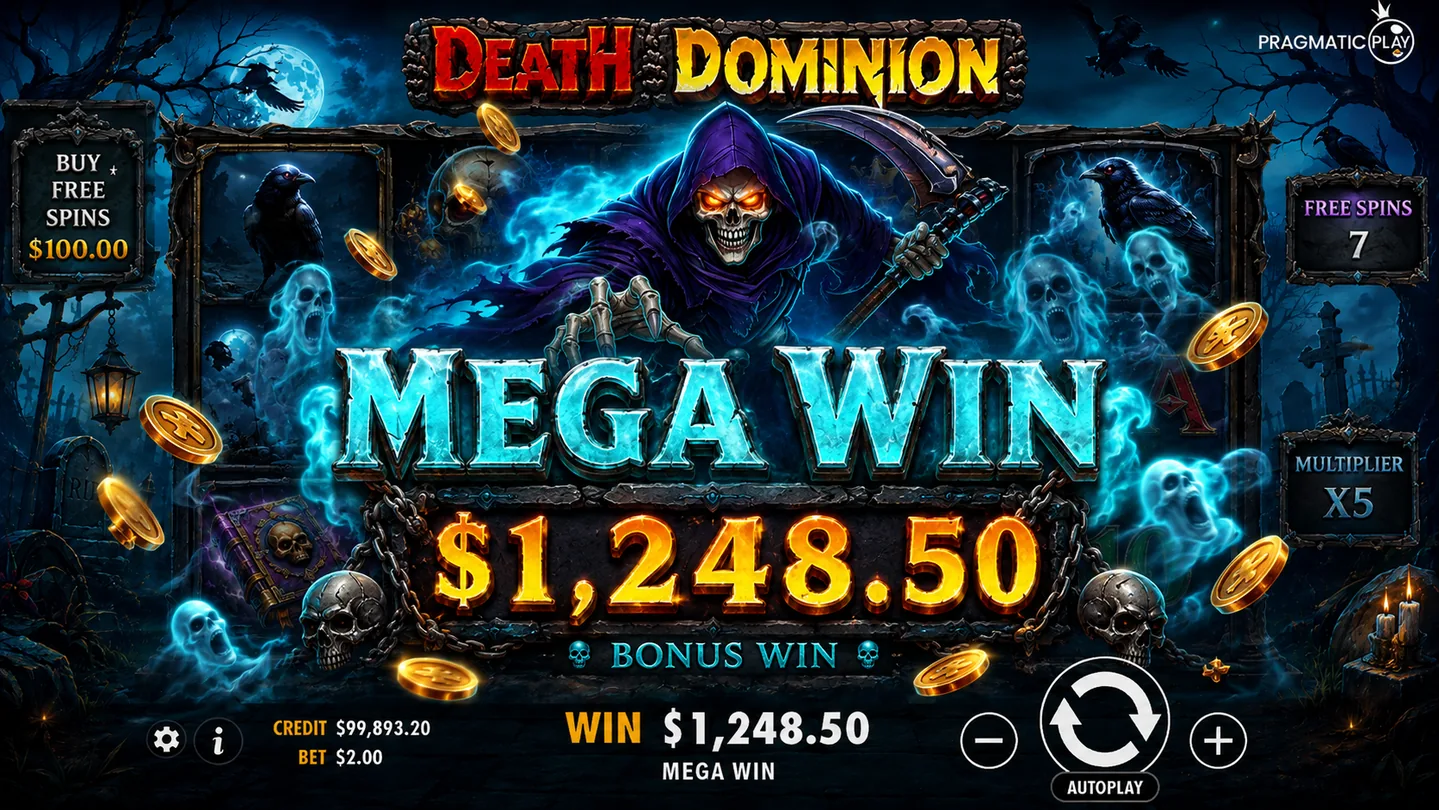
The second image shows a 1,248.50 Mega Win celebration inside a purchased bonus. That amount belongs only to the captured round and should never be presented as an average, a target or evidence that the feature price is easy to recover.
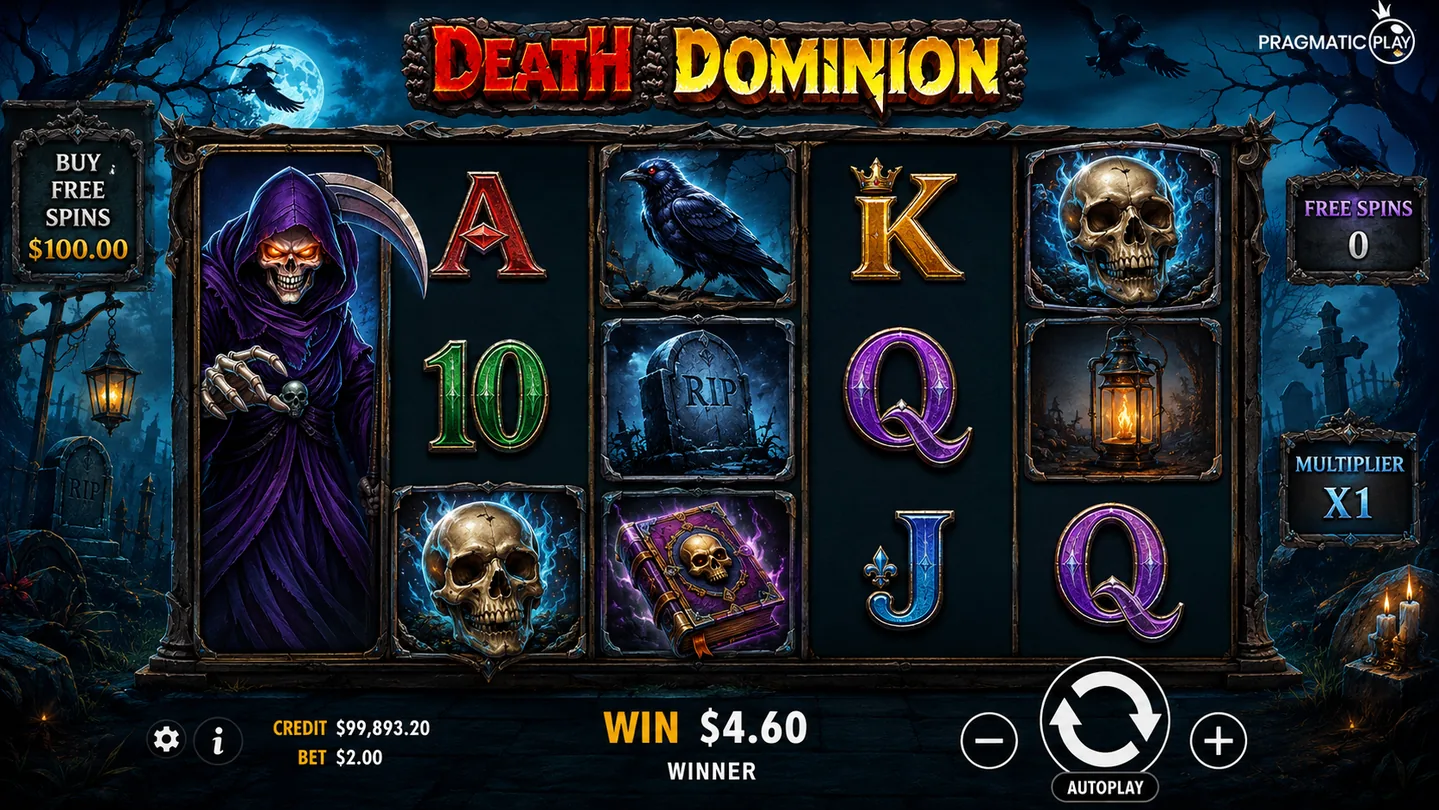
The third screen shows the ordinary 6×5 interface with a 4.60 settled win. It makes the left-side enhancement controls, right-side spin button and bottom balance and bet readouts easy to recognise before play.
The screenshots contain dollar values because that was the captured configuration. They do not establish the currency, minimum stake or available feature controls for every operator and region.
I keep captions factual: what is visible, where a counter sits and which mode appears active. I avoid inventing the sequence that preceded the image or the probability of seeing the same screen.
RTP, hit frequency and volatility
RTP, hit frequency and volatility describe the model over many rounds.
An RTP of 96.54% is a theoretical long-run figure for the stated configuration, not a refund rate for each player. The 25.51% hit frequency counts qualifying events under the provider's definition; it does not say that every fourth press pays enough to cover the stake.
Medium volatility describes the model relative to other games, but the Doom mechanic can make individual multiplier sequences feel abrupt. A modest volatility label is never a reason to increase the stake or assume that a bonus will arrive inside a chosen number of spins.
My stake has to remain comfortable when a tumble stops immediately and when a promising multiplier sequence is erased. If either outcome changes the plan, the stake is too high for the session I intended.
Short-term variance can easily dominate the theoretical edge. A session that finishes above the starting balance does not disprove the RTP, and a poor session does not mean the configured percentage was applied incorrectly.
I never combine hit frequency with RTP to manufacture a prediction for the next spin. They answer different long-run questions and neither creates a schedule for wins.
Mobile controls and readability
On mobile, verify the stake, counters and confirmation screen.
The 6×5 grid contains many small symbols, so I test both portrait and landscape orientation. The critical information is the total bet, balance, remaining spins, accumulated multiplier and any purchase price shown before confirmation.
Fast play shortens presentation; it does not improve the mathematical result. I keep normal speed during the first demo so Doom transformations, multiplier additions and tumble boundaries remain legible.
On a narrow screen, I finish each animation before touching the spin control again. This reduces accidental repeat inputs and makes it easier to separate the current paid spin from the next random round.
A confirmation panel deserves a deliberate pause on touchscreens. The difference between the base stake and a bonus price can be large even when both controls use the same compact visual style.
I also check horizontal overflow at 360 pixels. The article table should scroll inside its own wrapper, while the page, hero facts, gallery captions and final buttons remain inside the viewport.
Common reading mistakes
Do not confuse dramatic animations or captured wins with probability.
The first mistake is assuming every multiplier symbol is already banked. Doom can remove the multiplier symbols in play, and the bonus counter follows its own collection rules. I read the final win meter only after the sequence has completely settled.
The second mistake is treating Dominion Immortal as a guaranteed strong bonus. It supplies the most favourable Doom rules, but paying symbol counts, multiplier arrivals and tumble length remain random.
The third is using the supplied Mega Win screenshot as a benchmark. Screens document interface states; they do not establish frequency. The active rules, configured RTP and a fixed personal limit are more useful than any isolated result.
A large multiplier symbol is potential until the rules apply it and the final meter settles. Reading it as money too early exaggerates both wins and the frustration of a later Doom outcome.
Another mistake is comparing an enhanced bet with the standard game without accounting for cost. A busier screen bought at a higher multiple is not automatically better value.
Responsible session plan
Set money, time and stake limits before opening the game.
Before opening the game I choose a total spend, a finish time and one fixed stake. A multiplier that has just been erased can feel unfinished, but the next random spin has no obligation to restore it.
I do not raise the bet after a weak bonus or buy a more expensive variant to recover a previous price. If I start calculating how one dramatic result could repair the session, I stop rather than changing the plan.
Demo mode explains the controls and bonus differences without financial risk. Real-money play remains optional entertainment, available only to adults where legal, and no mechanic changes the need for independent money and time limits.
I keep the session limit outside the game, for example in a timer or written note, because an in-game balance alone does not show the time already spent or the amount originally planned.
When the limit is reached, a remaining feature purchase, an erased multiplier or an attractive bonus label is not unfinished business. Stopping is part of the plan, not a judgment about what the next random result might have been.
Game screens
Three supplied screens show Free Spins, a captured Mega Win and the base game.
The images document interface states only. Their balances, feature prices and totals do not predict another result.
One calm rules check
Keep the rules clear and the session limit clearer.
Learn how Pay Anywhere, tumbles and Doom interact in demo mode, then decide whether the possibility of losing a multiplier build suits the session you planned.
Death Dominion FAQ
Straight answers about RTP, Pay Anywhere, Doom and the four bonus variants.
What RTP does Death Dominion use?
Pragmatic Play lists 96.54% RTP for the standard published configuration. Check the opened game's information panel because the operator or region can use another available setup.
How does Death Dominion pay?
It uses Pay Anywhere on a 6×5 grid. Matching symbols are evaluated by their total count across the screen rather than by fixed paylines or left-to-right ways.
What does the Doom symbol do?
At the end of a tumble sequence it can transform into a random multiplier or nullify all multiplier symbols currently in play. Immortal variants remove the destructive outcome.
How many Free Spins can trigger?
Four, five or six Scatters award 12, 15 or 20 Free Spins. Three or more Scatters during the feature add five more spins.
What are the four bonus variants?
The modes are Standard, Dominion, Immortal and Dominion Immortal. Dominion enhances multiplier creation, Immortal protects against Doom nullification, and the combined mode applies both modifiers.
What is the maximum win?
The published maximum is 20,000 times the bet. It is a ceiling, not an expected result or a target for any individual bonus.
Core rules and mathematical figures were checked against Pragmatic Play's official information for Death Dominion. The help panel in the opened game remains the final reference for its configured RTP, bet range, feature prices and regional availability.