
SPRIBE social crash game
Aviator guide: I choose my cash out before the red plane takes off.
Aviator by SPRIBE strips casino play down to one rising line and one honest decision: cash out while the red plane is still flying, or lose the stake when it disappears. There are no reels to decode and no symbol chart to memorise. The tension comes from watching a real-time multiplier climb while deciding whether the number already on screen is enough.

My cockpit read
Aviator is easy to learn. The hard part is cashing out at the moment I planned.
The multiplier starts around 1.00x and rises while the plane flies. If I cash out before it leaves, the return is my stake multiplied by the displayed coefficient. If the plane goes first, that bet returns nothing. The rule fits in one sentence; the pressure hides inside the seconds between “enough” and “maybe one more step.”
I like Aviator because the interface makes that pressure visible. I dislike the myths that grow around it. Previous multipliers, chat messages, crowded tables and a sequence of short flights cannot reveal the next result. They can change my mood, but they do not change the mathematics of the coming round.

My short verdict: clean design, sharp tension and no room for prediction myths.
SPRIBE calls Aviator a social multiplayer game built around an increasing curve that can crash at any time. That description is accurate. Everyone in the same round watches the same flight, but each player controls a separate stake and cash-out moment. Seeing other people leave at 1.40x or hold beyond 10x creates theatre, not shared strategy.
The published RTP is 97%, which is strong on paper, but it is a long-run model rather than a promise for tonight. A short session can contain several immediate departures, one long climb, or any mixture between them. I never translate 97% into “97 euros back from every hundred today.” That is not how RTP works.
Aviator suits players who enjoy short rounds, clear controls and the feeling of making one visible decision. It is a poor match for anyone who becomes competitive with the leaderboard, chases losses after low multipliers, or interprets a history strip as a weather forecast. The cleaner the screen looks, the more important it is to bring my own limits.
My useful edge is not predicting the flight. It is removing improvisation: a fixed session budget, a fixed base stake, an optional auto cash-out level and a stop time that survives both wins and losses.
Verified Aviator facts
The Aviator facts I check before I put money at risk.
The core facts below come from SPRIBE's official Aviator product page and the game's standard rules. Casino-specific stake limits, currency, promotions and interface options can differ, so the live game panel always has the final word for the version in front of me.
| Developer | SPRIBE. |
|---|---|
| Game type | Social multiplayer mini game in the crash-game format. |
| Published RTP | 97% on SPRIBE's official product page; confirm the opened build. |
| Round objective | Cash out a bet while the multiplier is rising and before the plane flies away. |
| Return calculation | Successful cash out equals stake multiplied by the coefficient shown at exit. |
| Bet controls | Manual cash out, Auto Bet and Auto Cash Out are commonly available. |
| Two-bet mode | Two independent bet panels can be used in the same round where enabled. |
| Social tools | In-game chat, visible live bets and live statistics are official features. |
| Fairness | Provably Fair round verification is available through the game interface. |
| Devices | Desktop, tablet and mobile; SPRIBE describes the game as light and adaptive. |

How Aviator works
One round has three moments: place the bet, watch the multiplier, cash out.
1. Betting window. A short countdown appears between flights. This is when I enter the stake and, if I want less pressure later, set Auto Cash Out. I avoid changing the number in the final second. A rushed stake is already a bad start, even before the random result exists.
2. Take-off. The multiplier begins near 1.00x and rises in real time. The visual speed increases the sense that value is being created every second. In reality I am watching a temporary offer: I can accept the current coefficient by cashing out, or keep the full stake exposed.
3. Fly-away. The plane can disappear before or after my chosen point. If my cash-out instruction is registered first, the bet returns at that coefficient. If the round ends first, the stake is lost. There is no partial return for being close and no bonus for reacting a fraction after the event.
The clean way to understand the game is to separate outcome from decision. I cannot control when the flight ends. I can control the amount at risk, the coefficient I am willing to accept and whether I enter another round after the result.
Manual and automatic cash out
Auto Cash Out does not improve the odds; it protects a decision from my own hesitation.
Manual cash out is the dramatic version. I watch the number climb and press the button when I decide the return is enough. It feels active, but network delay, distraction and greed can all sit between intention and click. I never choose manual mode because I think fast fingers can beat a result already determined by the round.
Auto Cash Out lets me enter a coefficient before take-off. If the flight reaches that point, the game attempts to settle the bet automatically. Its real value is behavioural: the target does not move because the plane looks strong, another player is holding, or chat suddenly gets excited.
A lower target may produce more frequent successful exits but smaller returns. A higher target offers a larger multiple when reached but exposes the whole stake to more flights that end beforehand. Neither setting removes the house edge. I choose the one that creates a pace I can afford, not the one that promises to recover a previous loss.

The rule I keep visible
A higher number is not better if I cannot comfortably lose every attempt that misses it.
I set the target from the stake and session budget, never from the last red number in history. The round does not know that I nearly reached 5.00x, and the next plane has no obligation to finish the story.
Open Aviator route
Two bets create two exits, not a guaranteed hedge.
Many Aviator interfaces allow two independent bets in the same flight. I can set different stakes, cash one manually and let the other use Auto Cash Out. That flexibility is useful for testing how two risk levels feel, but the total exposure is the sum of both bets.
A common setup closes one bet at a modest multiplier and leaves the second for a longer flight. Players sometimes call the first bet “insurance.” I do not. An early fly-away can lose both stakes, and a low cash out may not cover the combined amount. Before using two panels, I calculate the total money on the runway and the exact coefficient needed to recover it.
For example, two equal bets double the cash committed to one random round. Cashing one at 1.50x returns only 1.5 times that single stake; it does not magically refund the untouched second stake. The second bet remains fully exposed until it cashes out or the plane leaves.
I recommend learning Aviator with one panel. Add the second only when the arithmetic is obvious and the combined stake still fits the same session limit. More buttons should improve clarity, not create a faster way to lose track of exposure.
History, chat and live bets
The social screen is useful context and dangerous fortune-telling material.
Aviator shows recent multipliers, other players' live bets and successful cash outs. SPRIBE also highlights in-game chat and statistics as core social features. They make the game feel shared: I can see the room celebrate a long flight or watch hundreds of players leave at different points.
None of that changes the next round. A row of low coefficients does not make a high one due. A leaderboard winner does not reveal a repeatable timing signal. A busy table does not produce a better crash point than a quiet table. The history strip is a record, not a prediction model.
I keep the interface useful by reading it after my own plan is set. Live bets can show how differently people use the same flight. Chat can make a demo session lively. If either starts pushing me to copy a stranger's stake or ignore my exit point, I close the panel.
Rain Promo and free-bet tools may appear where the casino enables them. I read their conditions before claiming anything and never raise my own deposit or stake just to participate in a promotion.
Verification can confirm a finished round; it cannot preview the next one.
Aviator includes a Provably Fair system designed to let players verify completed round outcomes through cryptographic data shown by the game. That is different from simply trusting an animation. The result can be checked against the round information after it has finished.
The important limitation is right in the timing: verification happens for an outcome that already exists. It does not turn a seed, hash, history chart or calculator into a way to know the next fly-away point. Any site, bot, signal group or APK promising advance Aviator results is selling a claim that the official verification system does not support.
I use the fairness panel as an audit tool. I check that I am playing the genuine SPRIBE title, open a completed round, inspect the available verification details and learn where the rules live. I do not paste secret account data into third-party “predictors,” install unknown apps or pay for signal channels.
This distinction matters for SEO searches too: “Aviator predictor,” “hack,” “signal bot” and “sure strategy” are popular phrases because the game creates suspense. They are not evidence that a working prediction method exists. The safest answer is also the accurate one: there is no reliable way to know the next crash point.
Aviator demo
I use free play to learn my own impatience before it becomes expensive.
Demo mode is perfect for Aviator because the controls are simple and the emotional pattern appears quickly. I begin with one bet panel, one unchanged virtual stake and no turbo-like rushing between rounds. My first goal is to recognise the betting window, manual cash out, Auto Cash Out and the point at which the plane leaving stops feeling surprising.
Then I run short blocks with different exit levels. I am not searching for the best coefficient; random samples cannot prove one. I am learning how often a target leaves me watching a lost stake and whether that frequency makes me want to break the plan. A setting that looks attractive on paper may be emotionally unsuitable.
Only after that do I test two panels. I add both stakes before comparing returns, try one automatic and one manual exit, and make sure the interface remains readable on mobile. If I cannot explain the total exposure in one line, I return to a single bet.
Demo results do not create a warm-up, a lucky account or a debt the real-money game must repay. When I switch modes, the only useful things I carry over are knowledge of the controls and a smaller, clearer plan.
- One small virtual stake and a manual cash out.
- The same stake with Auto Cash Out set before take-off.
- A round where I deliberately accept an early fly-away without changing the next stake.
- Two panels with the combined exposure calculated first.
- A completed-round fairness check and a clean stop.
RTP, risk and session pace
The official 97% is useful context, not a short-flight guarantee.
SPRIBE publishes a 97% RTP for Aviator. In plain language, that number describes the theoretical return across a very large volume of play under the game's model. It does not smooth my personal sequence, promise a minimum cash-out rate or tell me which target will succeed next.
Crash-game volatility is partly shaped by my exit choice. Low targets trade potential size for more frequent opportunities to settle before the plane leaves. High targets expose the stake for longer in exchange for a larger possible multiple. The underlying disadvantage remains. Moving the target changes the shape of the ride, not the fact that the game has an edge.
Fast rounds can compress a surprising amount of wagering into a few minutes. That is why I set both a money limit and a time limit. I also count the total of two panels as one round's stake. The most dangerous Aviator session is not always the one with the biggest single bet; it can be the one where small bets repeat so quickly that I stop noticing the total.
My final rule is simple: no Martingale, no loss recovery target and no extra deposit because the last plane left at 1.01x. I can pause, lower the stake or stop. I cannot make the random flight owe me a longer climb.
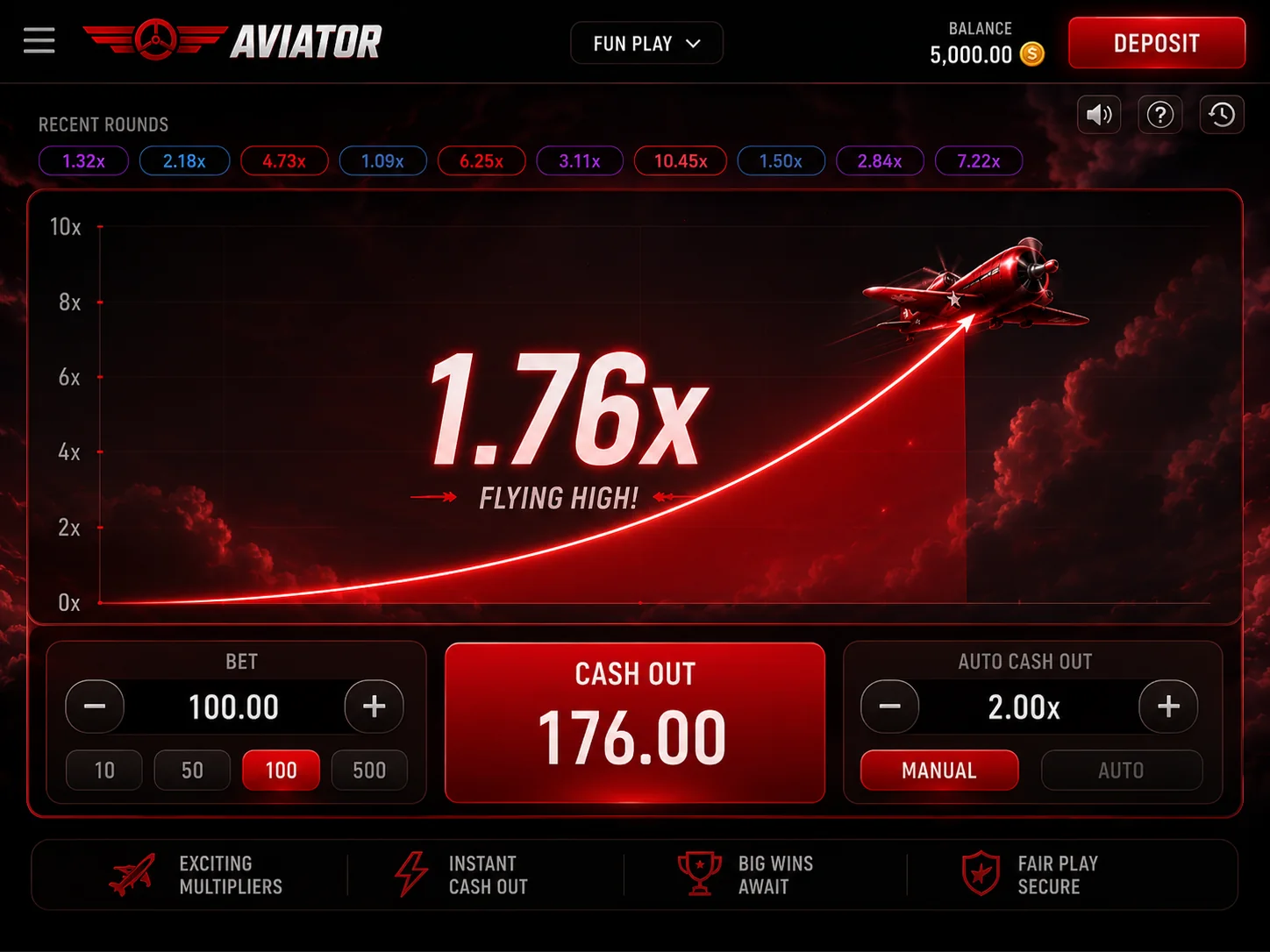
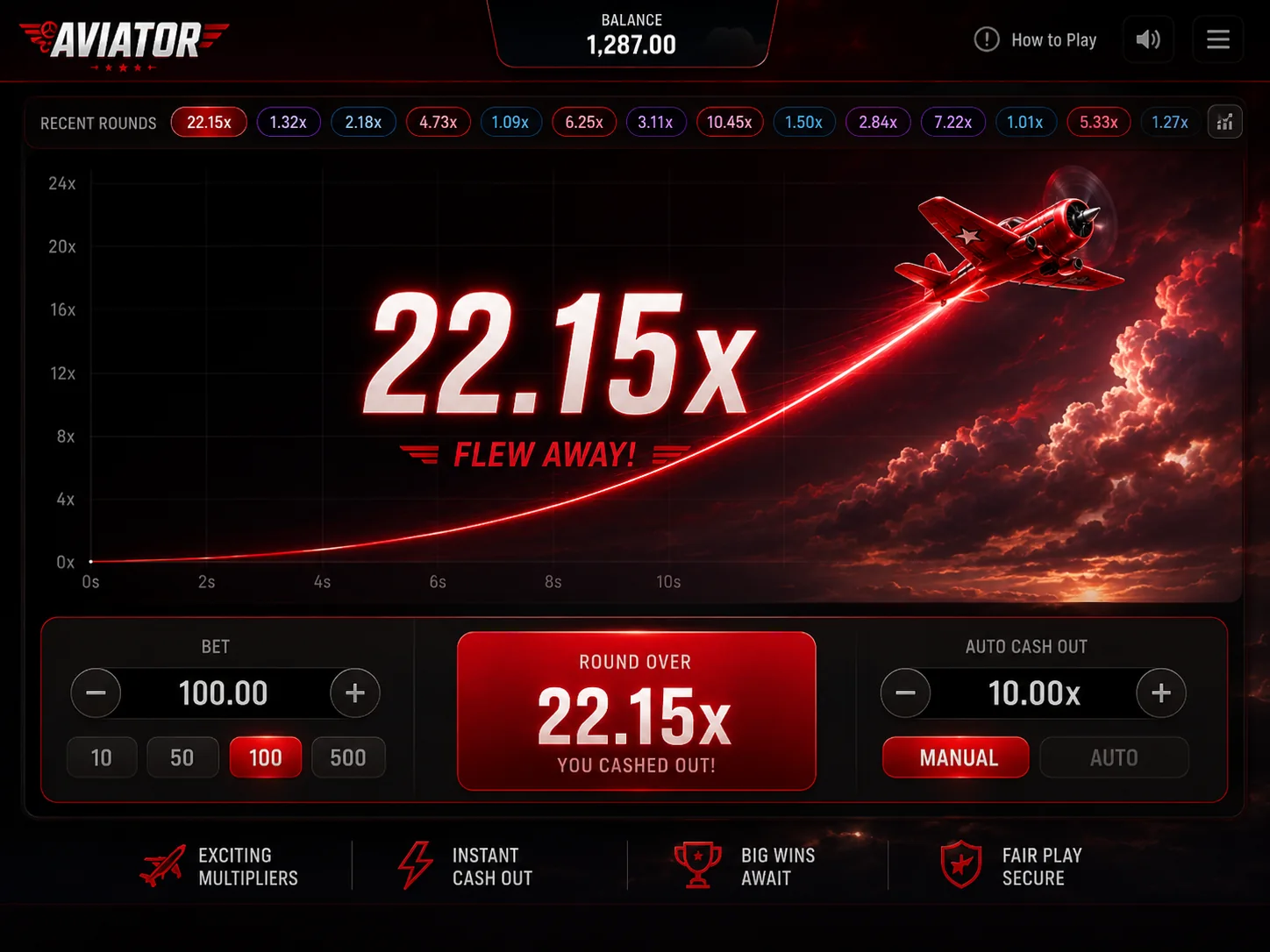
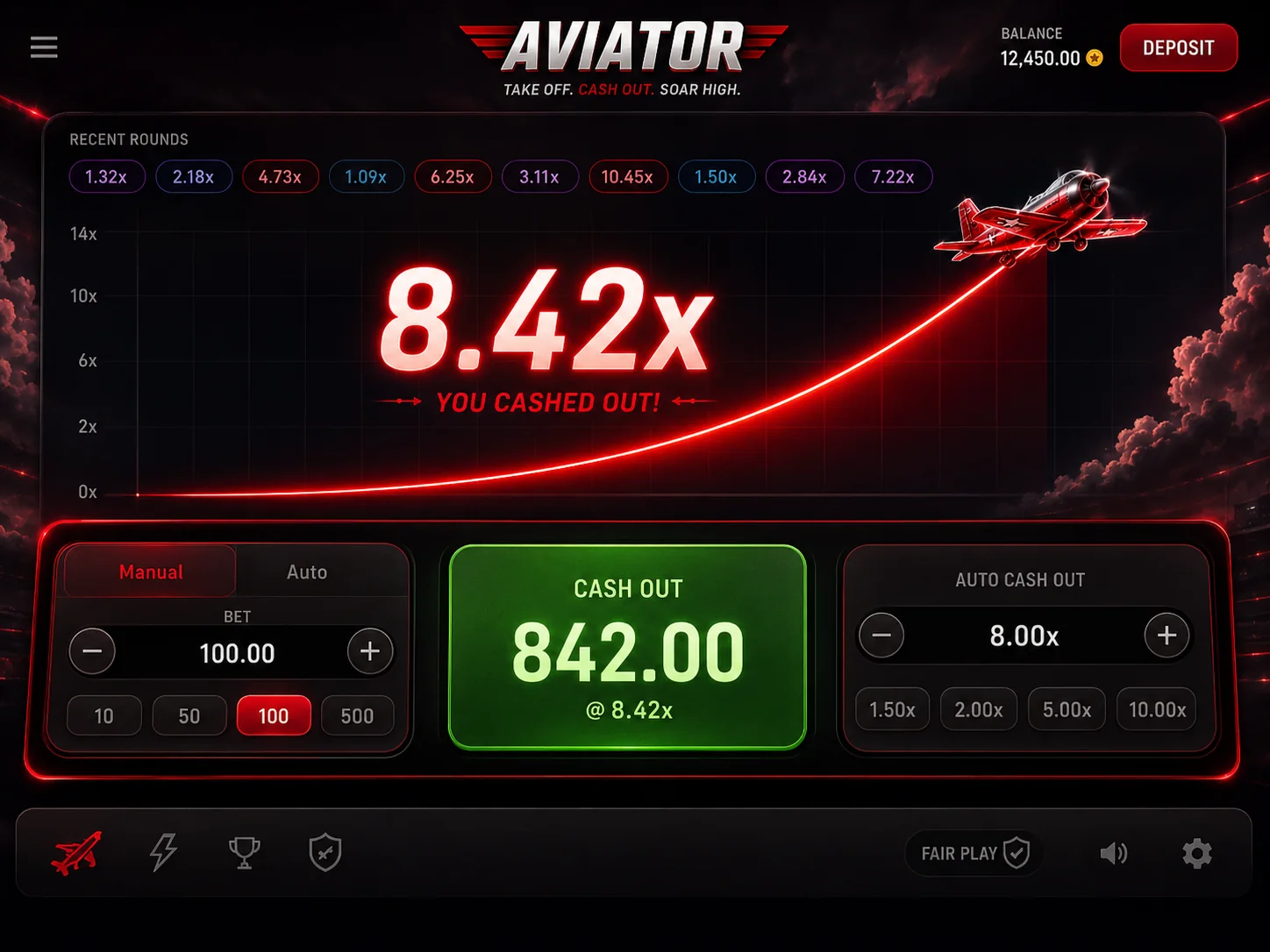
Aviator screenshots
The three game states I want to recognise before real money enters the cockpit.
These screens show a live rising multiplier, a finished flight and a successful cash out. I use them to understand the controls and result states, never to imitate the numbers shown.
Source and version check
I verify Aviator at the source, then check the casino build in front of me.
SPRIBE's official page confirms the 97% RTP, desktop-tablet-mobile support, rising crash curve, chat, live bets and statistics. I still inspect the opened game's help panel because casino limits, currencies, promotional tools and local wording can vary.
Read the official SPRIBE Aviator pageWhat I never promise
No predictor, pattern or cash-out target can guarantee the next flight.
A useful review explains the controls, maths, risks and feel of the game. It does not sell a signal. My goal is to help you recognise Aviator quickly, decide whether its pace suits you and keep the session under your control.
Ready to test Aviator with a calmer flight plan?
Check the genuine SPRIBE game, start in demo, keep the total stake visible and decide the exit before the red line starts climbing.
Find AviatorAviator FAQ
The questions I answer before the next take-off.
What is the Aviator game?
Aviator is SPRIBE's social multiplayer crash game. A multiplier rises while a red plane flies, and the player must cash out before the plane leaves to receive the stake multiplied by the exit coefficient.
What is the official Aviator RTP?
SPRIBE publishes a 97% RTP for Aviator. RTP is a long-run theoretical measure, not a prediction or guaranteed return for one session. Check the exact information panel in the opened game.
Can Aviator results be predicted from previous multipliers?
No. Recent low or high multipliers do not reveal the next fly-away point. History shows completed rounds and should not be treated as a signal.
What does Auto Cash Out do?
Auto Cash Out submits an automatic exit at a coefficient selected before the flight. It can make a plan easier to follow, but it does not improve the mathematical chance of the round reaching that point.
Can I place two Aviator bets in one round?
Many versions provide two independent bet panels. Each has its own stake and cash-out control, so the total money at risk is the sum of both bets.
Is there a working Aviator predictor or signal bot?
No reliable predictor can know the next result. Avoid APKs, bots, signal groups and services promising guaranteed coefficients or requesting casino login details.
What does Provably Fair mean in Aviator?
It means completed rounds can be checked using cryptographic verification data available through the game. Verification confirms a past outcome; it does not reveal a future one.
Can I play Aviator in demo mode?
Demo availability depends on the casino or platform. Where offered, it is the best place to learn manual and automatic cash out, two-panel exposure, history and fairness controls without risking real money.
What is the safest Aviator strategy?
No strategy guarantees profit. The useful approach is to choose a small total stake, set a cash-out plan before take-off, avoid loss chasing, use money and time limits, and stop when either limit is reached.